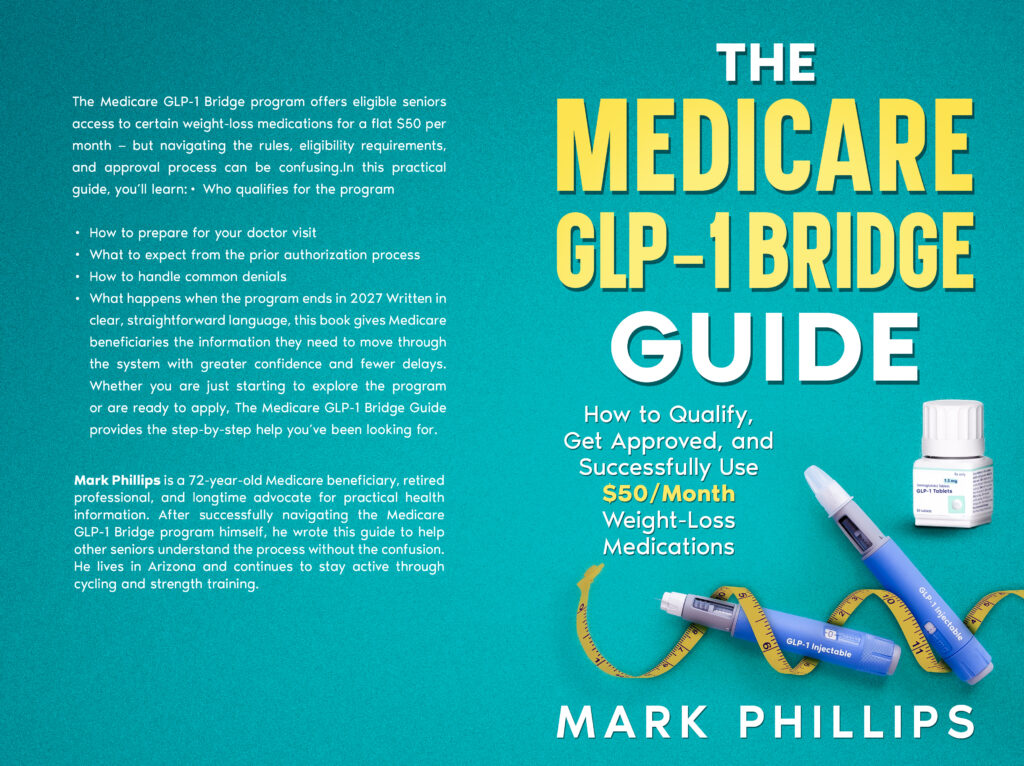
On this page, I will continually update it with the latest updates on the Medicare GLP-1 Bridge Program and my book as I learn about them. You can find my book The Medicare GLP-1 Bridge Guide: How to Qualify, Get Approved, and Successfully Use $50/Month Wegovy, Zepbound & Foundayo
Last updated: November 24, 2026
Latest updates (newest first)
Nov 24, 2026: Open enrollment ends Dec. 7. Don’t switch your way out of $50. Your plan’s brand doesn’t decide whether you keep the Bridge, but its type does. Private fee-for-service plans, cost plans, health care prepayment plans, PACE, fallback plans and religious fraternal benefit plans don’t qualify unless you also carry a stand-alone Part D plan. And if your 2027 plan covers a GLP-1 for you (for diabetes or sleep apnea, for example) and you fill it there, later Bridge claims can be rejected. Full checklist: [Don’t Switch Your Way Out of Your $50 GLP-1 — paste #6 link here].
Nov 2026: Experts say the Bridge could grow. A JAMA summit report on obesity suggested expanding the Medicare GLP-1 Bridge and the Medicaid BALANCE program if they prove successful.
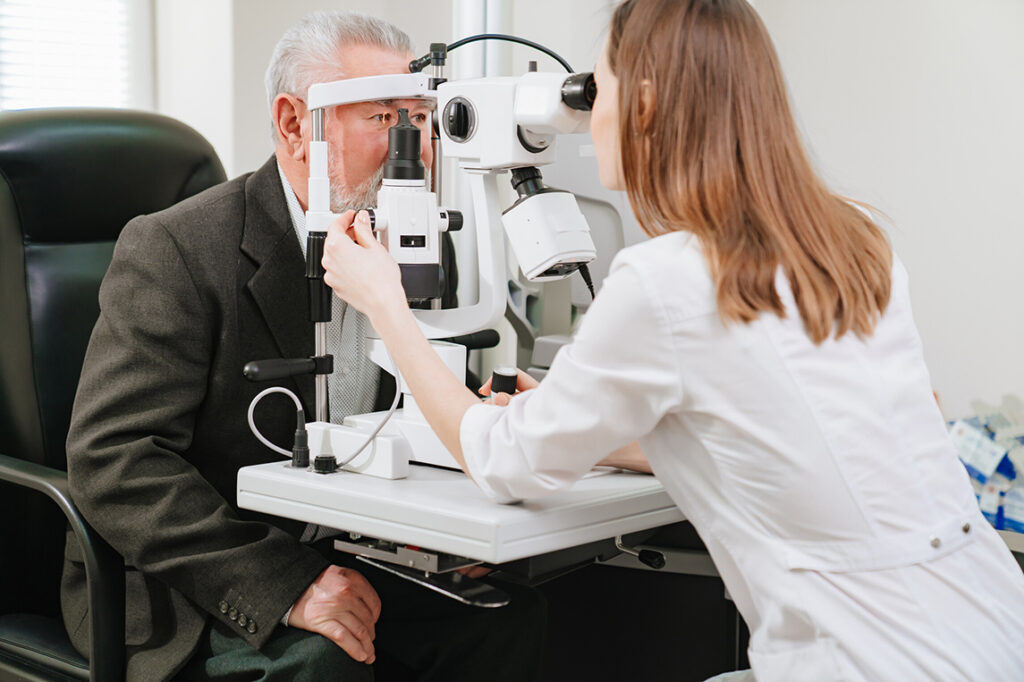
Nov 16, 2026: New FDA eye warning. The FDA added a warning about a rare optic nerve condition (NAION) to every GLP-1 label. What it means for you: New FDA Eye Warning on Your $50 GLP-1 Pen, and the drug-by-drug research in [Will My GLP-1 Hurt My Eyes? — paste #12 link here].
Nov 2026: How many people signed up. About 1.1 million Medicare members signed up for the Bridge, and roughly 700,000 have filled a prescription (Becker’s; Forbes).
No need to reapply for 2027. Once approved, your Bridge prior authorization is valid through December 31, 2027, including refills and dose changes, unless you switch to a different GLP-1. The Part D program Medicare had planned for 2027 (called BALANCE) was delayed, so the Bridge keeps running through the end of 2027.
The $50 doesn’t count toward your Part D limits. Bridge copays don’t count toward your Part D deductible or your yearly out-of-pocket cap. That cap rises to $2,400 in 2027, up from $2,100 in 2026.
Using a Zepbound savings card? It ends this year. Lilly’s Zepbound savings card expires December 31, 2026. Coupons and discount programs can’t be combined with a Bridge claim.
Pharmacy tips if your claim is rejected
- The Zepbound KwikPen is covered. The single-dose pen, vials and pen needles are not. (New to the KwikPen? See How to Use the Zepbound KwikPen.)
- Fills must be 28 or 30 days. No 90-day supplies or partial fills.
- The Bridge bills to BIN 028918 and PCN MEDDGLP1BR. Show this to your pharmacist if they’re billing your regular plan by mistake.
Not sure you qualify? Start with The Medicare GLP-1 Bridge Program Eligibility Requirements, and grab my free downloads to take to your doctor.
Sources: Medicare.gov, “Weight loss drugs”; Obesity Medicine Association, “Updates to Medicare Coverage of GLP-1 Medications”; GLP Winner, “Medicare GLP-1 Bridge: Your Open Enrollment Checklist” (citing CMS Bridge guidance for plans, pharmacies and providers); GLPCompare, “Medicare GLP-1 Bridge in 2026 and 2027”; AJMC, “Health Equity & Access Weekly Roundup,” Nov. 20, 2026; CURE, “Medicare Part D 2027: What a $2,400 Cap Means,” Nov. 11, 2026; Becker’s Hospital Review; Forbes, Nov. 8, 2026; FDA Drug Safety Communication, Nov. 9, 2026.
The Medicare GLP-1 Bridge program was created as a short-term demonstration by the Centers for Medicare & Medicaid Services (CMS) to give eligible Medicare beneficiaries temporary access to certain GLP-1 weight-loss medications at a fixed $50 monthly cost. For years, Medicare was generally prohibited from covering drugs used primarily for weight loss. Growing rates of obesity and related health conditions among older adults created pressure for a limited program that could test broader access. The Bridge program officially began on July 1, 2026, and is currently scheduled to run through December 31, 2027.