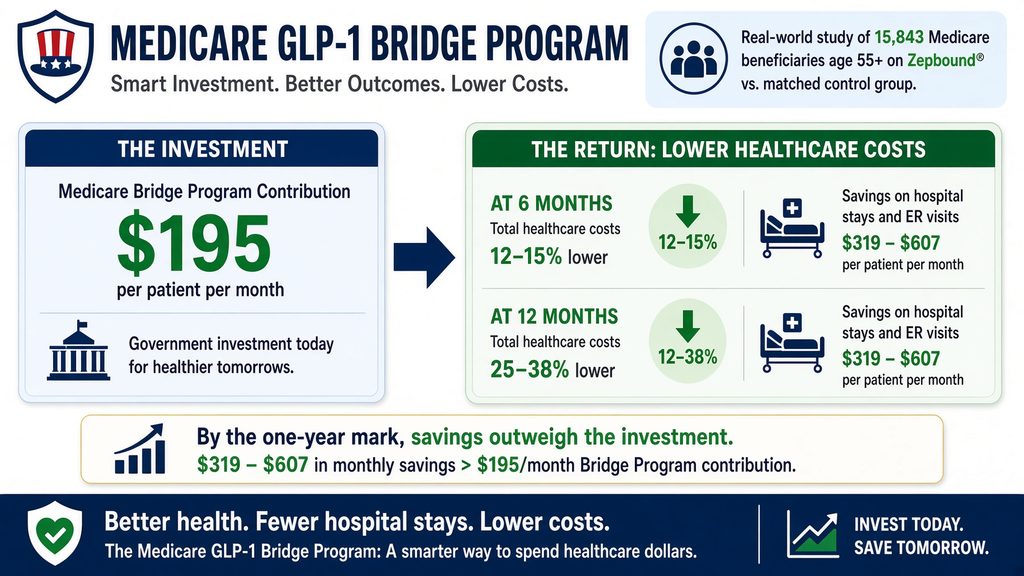
One of the most common questions I hear is: “Do I qualify for the Medicare GLP-1 Bridge program?” The rules are more specific than many people realize. This chapter gives you the exact criteria, at the time of publishing this book, so you can do a quick self-check before investing time in doctor visits and paperwork.
Official Eligibility Requirements
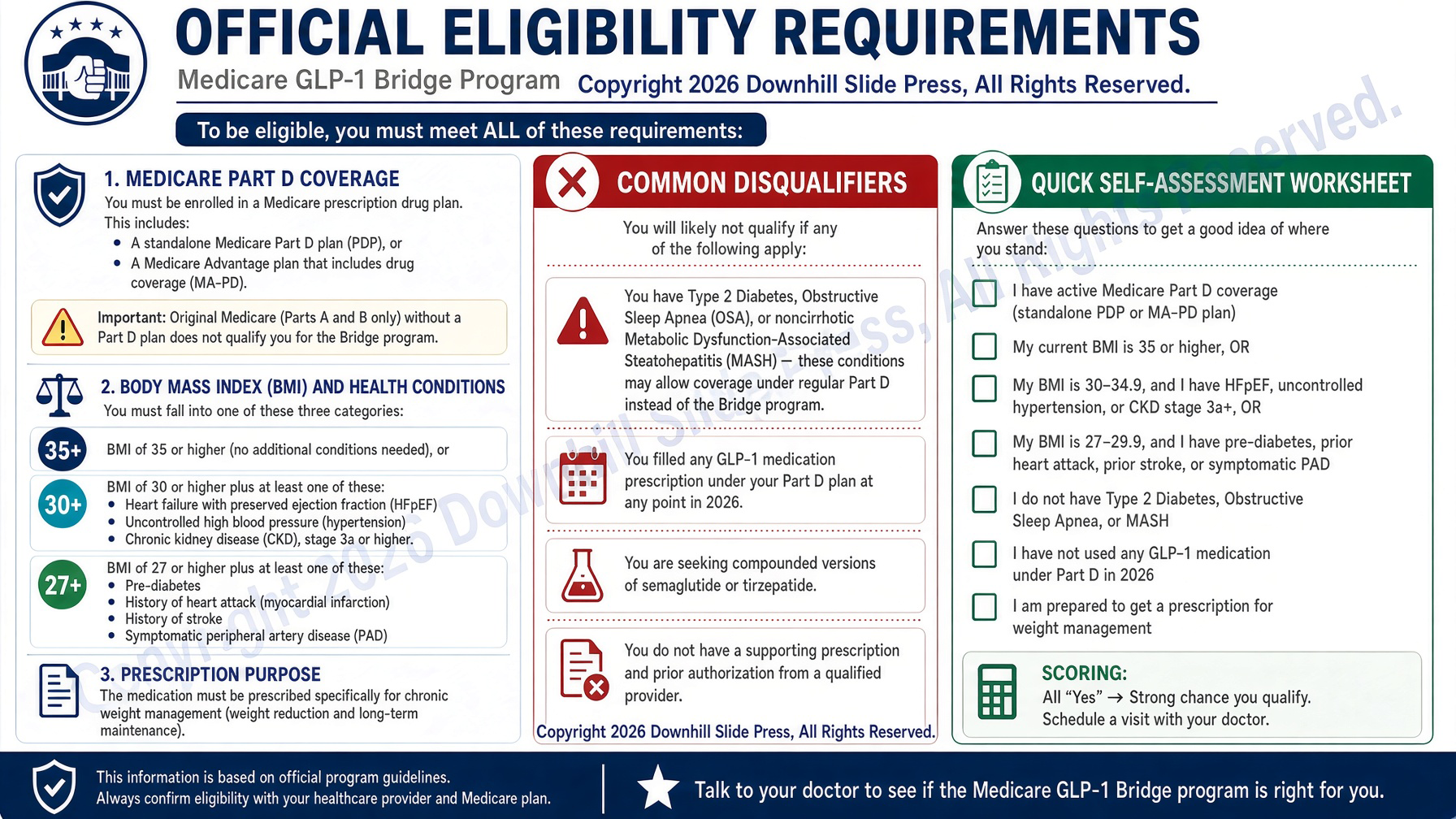
To be eligible for the Medicare GLP-1 Bridge program, you must meet all of these requirements:
Medicare Part D Coverage: You must be enrolled in a Medicare prescription drug plan. This includes:
- A standalone Medicare Part D plan (PDP), or
- A Medicare Advantage plan that includes drug coverage (MA-PD).
Important: Original Medicare (Parts A and B only) without a Part D plan does not qualify you for the Bridge program.
Body Mass Index (BMI) and Health Conditions: You must fall into one of these three categories:
- BMI of 35 or higher (no additional conditions needed), or
- BMI of 30 or higher plus at least one of these:
- Heart failure with preserved ejection fraction (HFpEF)
- Uncontrolled high blood pressure (hypertension)
- Chronic kidney disease(CKD), stage 3a or higher, or
- BMI of 27 or higher plus at least one of these:
- Pre-diabetes
- History of heart attack (myocardial infarction)
- History of stroke
- Symptomatic peripheral artery disease (PAD)
Prescription Purpose: The medication must be prescribed specifically for chronic weight management (weight reduction and long-term maintenance).
Common Disqualifiers
You will likely not qualify if any of the following apply:
- You have Type 2 Diabetes, Obstructive Sleep Apnea (OSA), or noncirrhotic Metabolic Dysfunction-Associated Steatohepatitis (MASH) — these conditions may allow coverage under regular Part D instead of the Bridge program.
- You filled any GLP-1 medication prescription under your Part D plan at any point in 2026.
- You are seeking compounded versions of semaglutide or tirzepatide.
- You do not have a supporting prescription and prior authorization from a qualified provider.
Quick Self-Assessment Worksheet
Answer these questions to get a good idea of where you stand:
- I have active Medicare Part D coverage (standalone PDP or MA-PD plan)
- My current BMI is 35 or higher, OR
- My BMI is 30–34.9, and I have HFpEF, uncontrolled hypertension, or CKD stage 3a+, OR
- My BMI is 27–29.9, and I have pre-diabetes, prior heart attack, prior stroke, or symptomatic PAD
- I do not have Type 2 Diabetes, Obstructive Sleep Apnea, or MASH
- I have not used any GLP-1 medication under Part D in 2026
- I am prepared to get a prescription for weight management
Scoring:
All “Yes” → Strong chance you qualify. Schedule a visit with your doctor.
One or more “No” → You may still have options. Talk to your physician about your specific situation.